
How to Identify Storm Damage: Wind, Hail & Leak Detection
Early detection saves thousands. Learn how to spot hidden roof damage before interior leaks take over.

Written by Mike Banes
Owner of ELR Roofing
Pennsylvania weather can change in an instant. Severe summer thunderstorms in Collegeville, high wind squalls in the Perkiomen Valley, and winter ice accumulation across Montgomery County put constant stress on your exterior.
Most storm damage isn’t immediately obvious from the ground. Knowing how to safely spot the early warning signs of wind uplift, hail impact, and hidden leaks allows you to take action before structural damage occurs.
1. Wind Damage: Creased, Lifted, or Missing Shingles
High winds don’t always blow shingles completely off your roof. Often, strong gusts lift shingles up just far enough to break the manufacturer’s thermal sealant strip underneath.
- Horizontal Creasing: When a shingle is lifted by wind and flaps backward, it creates a faint dark crease line near the top where granules break away.
- Compromised Sealant: Once the adhesive seal is broken, wind-driven rain can easily force water underneath the shingle during the next storm.
- Exposed Underlayment: If shingles are missing completely, your secondary barrier is exposed directly to UV rays and rain, requiring immediate tarping or repair.
2. Hail Impacts: Bruises, Granule Loss & Soft Spots
Hailstones act like miniature hammers hitting your roof. Even small hail can dislodge protective granules and fracture the fiberglass mat inside the shingle, drastically shortening its lifespan.
- Shingle “Bruising”: Hail impacts create round, dark indentations where granules have been knocked away, leaving bare asphalt exposed to sunlight.
- Soft Spots: Pressing gently on a hail mark reveals a spongy feel underneath, indicating the fiberglass matting has cracked.
- Collateral Indicators: Check soft metal surfaces at ground level—dents in aluminum gutters, downspouts, or window screens are strong evidence of severe hail impact on your roof.
3. Interior Leak Detection: Finding the Hidden Warning Signs
Water travels along rafters and joists before finally dripping through your drywall. By the time a brown stain appears on your living room ceiling, the leak has likely been active for weeks.
Perform a quick inspection after severe rainfall and check for these signs:
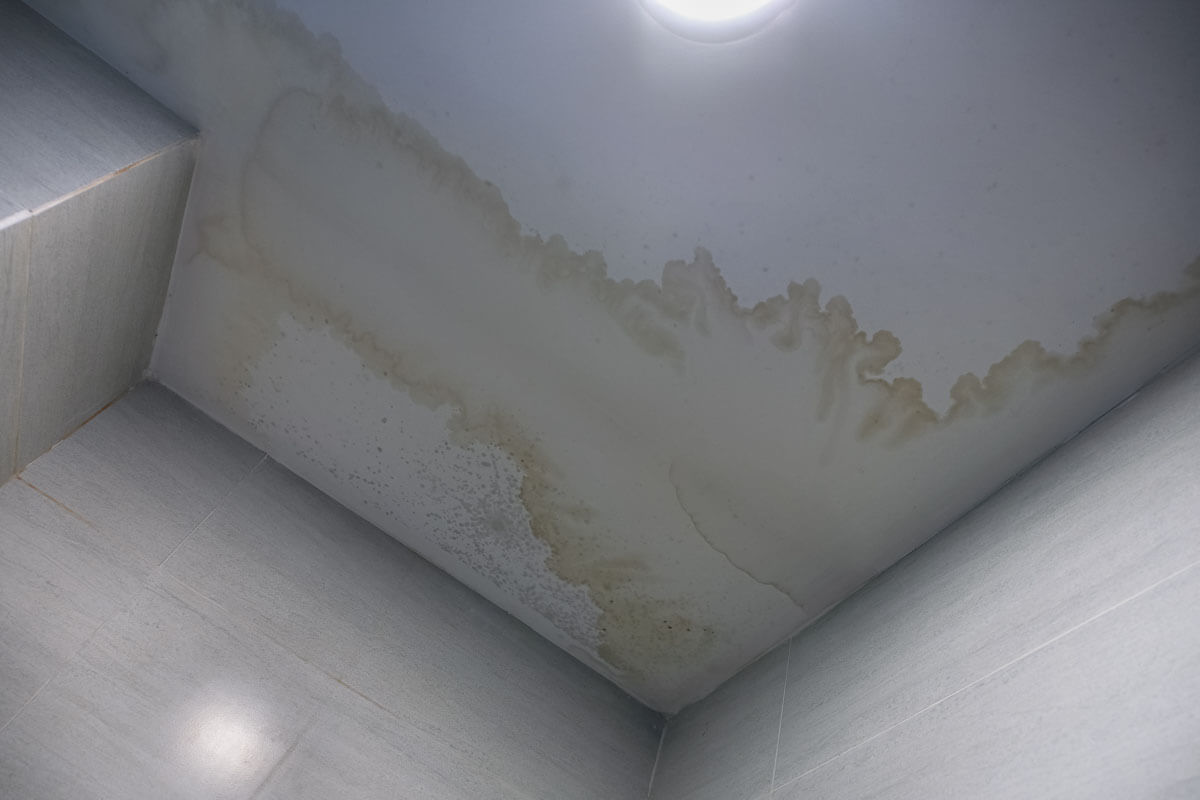
- Water Rings on Ceilings & Walls: Discolored patches or peeling interior paint near outer walls or chimney lines.
- Attic Moisture & Damp Insulation: Wet insulation loses its R-value immediately and encourages mold growth. Look for dark water stains on the wood decking.
- Musty Odors: Persistent damp smells in upstairs rooms or attics often point to trapped moisture behind drywall.
Want to explore more homeowner guides? Return to our Roofing Learning Center.
Suspect your roof took damage in a recent storm? Call Mike Banes directly at (267) 718-4790 or request a free estimate for an honest, comprehensive storm inspection.
Why Homeowners Choose ELR Roofing
Unlike larger regional companies that send a salesman to write an estimate and then subcontract your roof to an unfamiliar crew, ELR Roofing does things differently. When you hire ELR, you deal directly with me, Mike Banes. I am on site for every single project to oversee quality, ensure clear communication, and make sure your property is treated with complete respect from start to finish.



Trusted Industry Resources

Severe Weather Resistance
Learn about the high-impact and wind testing behind Owens Corning WeatherGuard Shingles.
Storm Coverage & Warranties
Discover how Owens Corning Preferred Warranties protect your investment against high-wind events.
FEMA Roof Safety
Review residential storm safety and emergency tarping protocols from FEMA Emergency Preparedness.
Owens Corning Shingles
Explore durable architectural asphalt shingles or test colors on your home using our Roof Color Visualizer.


